Countertops
Ceramic, porcelain, granite tile and Formica countertops, plus Giani paint for a tired one
Ceramic, porcelain and granite tile countertops, Formica, and Giani countertop paint, picked in the same showroom visit as your new floor and installed by the same crew.
Chapter 01
What tells you a countertop is done, not just dated
Cracked grout lines running straight across a tile countertop almost always start underneath it, not on top of it. If the cabinet base or the plywood deck the tile sits on flexes even a little, under a heavy mixer or just from years of leaning on the edge, the grout is the first thing to give. A crack that keeps coming back in the same spot after it has been patched is telling you the movement is still there, not that the patch was bad.
Formica shows its age at the edges before anywhere else. The laminate sheet is glued down, and once moisture works in at a seam or a cut edge near the sink, it lifts a little at a time until there is a visible gap you can catch a fingernail on. By the time it is easy to see, the substrate underneath has usually taken some water too.
Stained grout on a ceramic, porcelain or granite tile top is a different problem entirely, and it is worth telling apart from the cracks above. Years of coffee rings and daily wiping darken grout long before the tile itself is in any trouble, and that is a cleaning and resealing question, not a tear-out question.
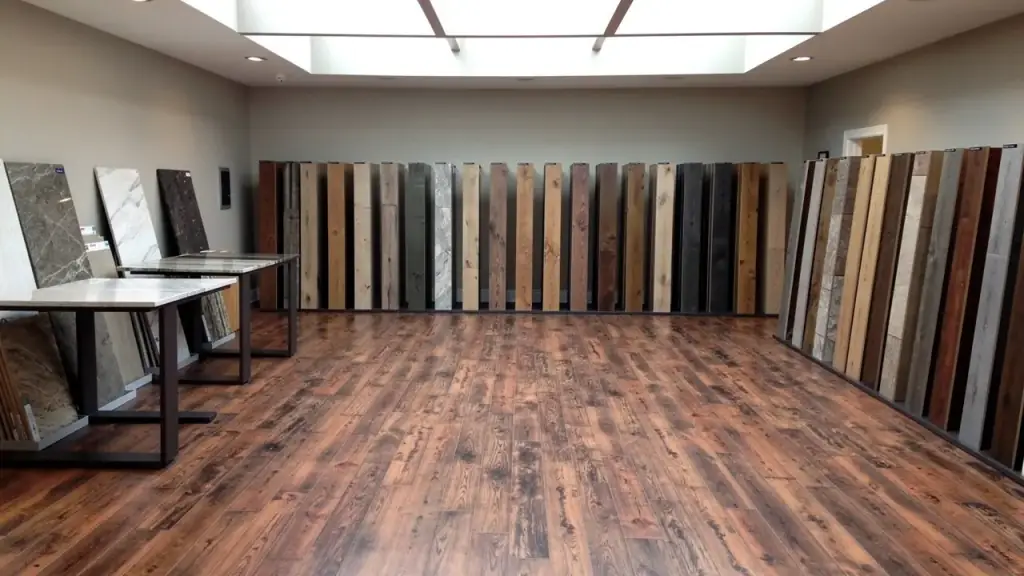
Stone and tile slabs on display tables beside a wall of flooring sample boards
Tile, granite tile and Formica, set to last
Ceramic, porcelain and granite tile tops go down over a solid backer, either cement board or exterior grade plywood set level and screwed to the cabinets, rather than straight onto whatever deck is already there. That backer is what keeps the grout from cracking the way it did on the old top: a rigid, level surface underneath means the tile is not absorbing movement it was never built to handle.
A Formica replacement gets a full new sheet rather than a patch over the lifted section, with seams planned to land away from the sink and the stovetop where water and heat do the most damage. Edge profile and color are picked at the same time as the sheet itself, so the new counter reads as one piece rather than a repair.
Most customers pick their counter and their floor in the same visit to the showroom at 4211 Lakeland Dr, holding a granite tile sample or a Formica swatch next to the plank or carpet they are already leaning toward. That matters more than it sounds like it should: the same crew installs both, on one schedule, instead of coordinating a flooring contractor and a countertop contractor separately.
Chapter 03
Giani countertop paint: what it can fix and what it can't
Giani is a countertop paint system, applied in layers over an existing laminate or solid surface top to give it a stone-look finish without tearing anything out. For a counter that is structurally sound but simply looks dated, it is a genuine way to change the look of a kitchen or bath in a weekend rather than a full remodel.
We are honest with anyone asking about it at the Lakeland Drive showroom or on (601) 591-0902: Giani is a refresh, not a repair. It is not the right answer for a counter that is cracked, delaminating at the edge, or has taken water damage underneath, because paint over a damaged substrate only hides the problem for a while. Those tops need an actual tile or Formica replacement, covered above.
On a counter that is a good candidate, the finish needs its topcoat resealed on a regular schedule to keep its resistance to scratches and water, and it is not meant to be cut on directly any more than a real stone top would be. Treated that way, it holds up well as the lower-cost option between living with a dated counter and replacing it outright.
Ashley's Flooring. Call (601) 591-0902.